A website for a small business in Thurgau comes together in seven steps: first meeting, concept, design, content, build, testing and launch. For a small company website, expect anything from a few weeks to a few months; the pace is usually set by the copy and images. This post walks through each step, explains what drives the cost and covers the obligations Swiss law places on your website.
How does the website design process work?
The process is much the same for almost every small business website. Once you know the steps, you can plan better and you know when each decision is due.
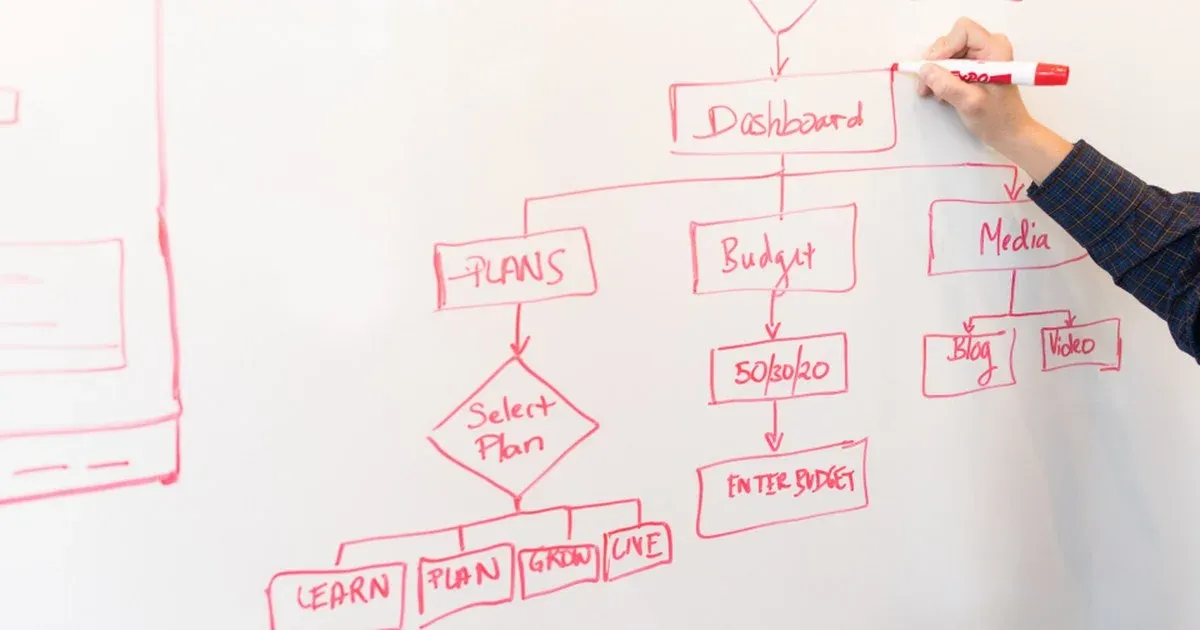
- First meeting and quote. Together you clarify the goal, target audience, scope and budget. You come away with a quote that describes the services clearly.
- Concept and page structure. Which pages do you need, and what should visitors do on each one? This turns into a sitemap, often with simple sketches of the most important pages.
- Design. Colours, fonts, imagery and the layout of the main pages. If you already have a logo and a corporate design, the design builds on them.
- Content. Copy, photos, references, prices. This step is usually down to you, or you buy it in separately. Your own photos make a stronger impression than stock images: for Sharon’s Physio, for example, we photographed the locations and the team ourselves.
- Build. The website is coded or set up in a content management system, with forms, booking or a shop.
- Testing. How it looks on mobile, loading speed, forms, privacy policy and imprint.
- Launch and running. The website goes live, the sitemap is submitted in Google Search Console, and from then on it needs hosting, updates and upkeep.
How long does it take to have a website built?
For a small company website with five to ten pages, expect anything from a few weeks to a few months. That is a guide figure from our own projects, not a guarantee. The technology is rarely the bottleneck. What really sets the timeline:
- Content: If your copy, photos and logo are ready at the start, things move much faster. If they are missing, the whole project waits.
- Approvals: If several people have to sign off, every round adds time to the schedule.
- Features: A shop, appointment booking or connections to existing software need extra time to build and test. For the Shopify store of Neonwerk, that meant a configurator with live preview and the payment methods, including TWINT; for Lohr Wassersport, a custom booking tool.
- Multiple languages: Every additional language means more copy, translation and checking.
You save the most time by gathering your copy, photos and logo before the start and naming one person who makes the decisions.
What does a website cost for a small business in Switzerland?
Three things set the price: scope, content and features. A simple business-card website with a few pages costs considerably less than a multilingual site with a shop. We are not aware of any official price statistics for websites in Switzerland. An analysis by the Swiss agency beyondweb, which by its own account reviewed 161 providers and derived prices for 36 of them, gives these guide figures in CHF excluding VAT (beyondweb.ch, updated 11 October 2026):
| Type of website | Website builder or flat rate | Freelancer | Agency |
|---|---|---|---|
| One-pager | 500–1,500 | 700–2,200 | 1,000–3,500 |
| Small business website up to about 15 pages | 2,000–5,000 | 3,000–8,000 | 5,000–15,000 |
| Extensive, multilingual | – | 5,000–15,000 | 10,000–30,000 |
Treat these figures as a rough guide: the source is itself a provider, and the sample is small. What the price includes matters more than the range.
What costs come after the launch?
A website costs money every year, even if nobody changes anything. How much depends heavily on the system and the level of service you want, which is why we do not quote flat amounts here. These items come up:
- Hosting for the server your website runs on
- Domain, for example yourcompany.ch
- Email mailboxes, if they are not already running elsewhere
- Maintenance and updates, so software and security stay current
- Changes to copy, prices or offers
With every quote, ask which of these items are included and what a year of running the site costs.
How do you compare quotes fairly?
Quotes can only be compared if they include the same things. Check whether each quote covers these points:
- Concept and page structure
- Design for desktop and mobile
- Copy and images: supplied by you or created for you
- Google basics: titles, descriptions, clean structure, loading speed
- Privacy policy, imprint and cookie consent
- Training, handover and who your contact is after the launch
What does the law require of your website?
The revised Federal Act on Data Protection (FADP/DSG) has been in force since 1 September 2023. If your website collects personal data, for example through a contact form or an analytics tool, you have to inform the people concerned in advance (the federal SME Portal (KMU-Portal), in German). That calls for a privacy policy in a clearly visible place. Among other things, the SME portal recommends stating which data is processed and for what purpose, what is passed on to third parties, which choices and rights users have, who the contact person is and which security measures are in place (KMU-Portal, e-commerce and data protection, in German). For an example of what this can look like in practice, see our own privacy policy.
Have the legal texts checked for your business. Templates are a start, but they do not know your tools and processes.
Why do mobile and loading speed matter?
Google uses the mobile version of a website for indexing and ranking, fetched with its smartphone crawler (Google Search Central). For loading speed, Google sets clear targets with the Core Web Vitals: the largest content element should be visible within 2.5 seconds at most, the page should respond to input within 200 milliseconds, and the layout should barely shift (CLS of 0.1 or less), each measured at 75% of page views (web.dev).
So ask how your new website will be tested on mobile and which values it reaches at handover.
Local or further afield: does location matter?
Not for the technology, but often for working together. A web designer from the region knows the market, can come by for a photo shoot or a meeting on site and is easy to reach with questions. Whether Thurgau, Zurich or online, what counts are references you can check, a quote you can understand and a clear arrangement for the time after the launch.
We build websites for small businesses in Thurgau and across eastern Switzerland, from our base in Steckborn on the Untersee. You can find out more on our web design page and in our projects. For a no-obligation first meeting, get in touch via our contact page.
Frequently asked questions
What do I need before my website is built?
A clear goal, such as more enquiries or bookings, a list of your services, a logo, photos and some first drafts of copy. The more of this is ready at the start, the faster and cheaper the project will be.
Agency or freelancer?
Either can be the right fit. Freelancers are often cheaper and directly reachable; agencies cover more disciplines, such as photography, copywriting and marketing. What matters is that one person stays responsible for your project.
Do I need a privacy policy?
Yes, as soon as your website collects personal data, for example through a contact form, embedded maps or analytics tools. That applies to many company websites.
Can I edit my website myself later?
That depends on the system. Before the start, clarify which content you want to change yourself, such as copy, prices or blog posts, and have someone show you how at handover.